
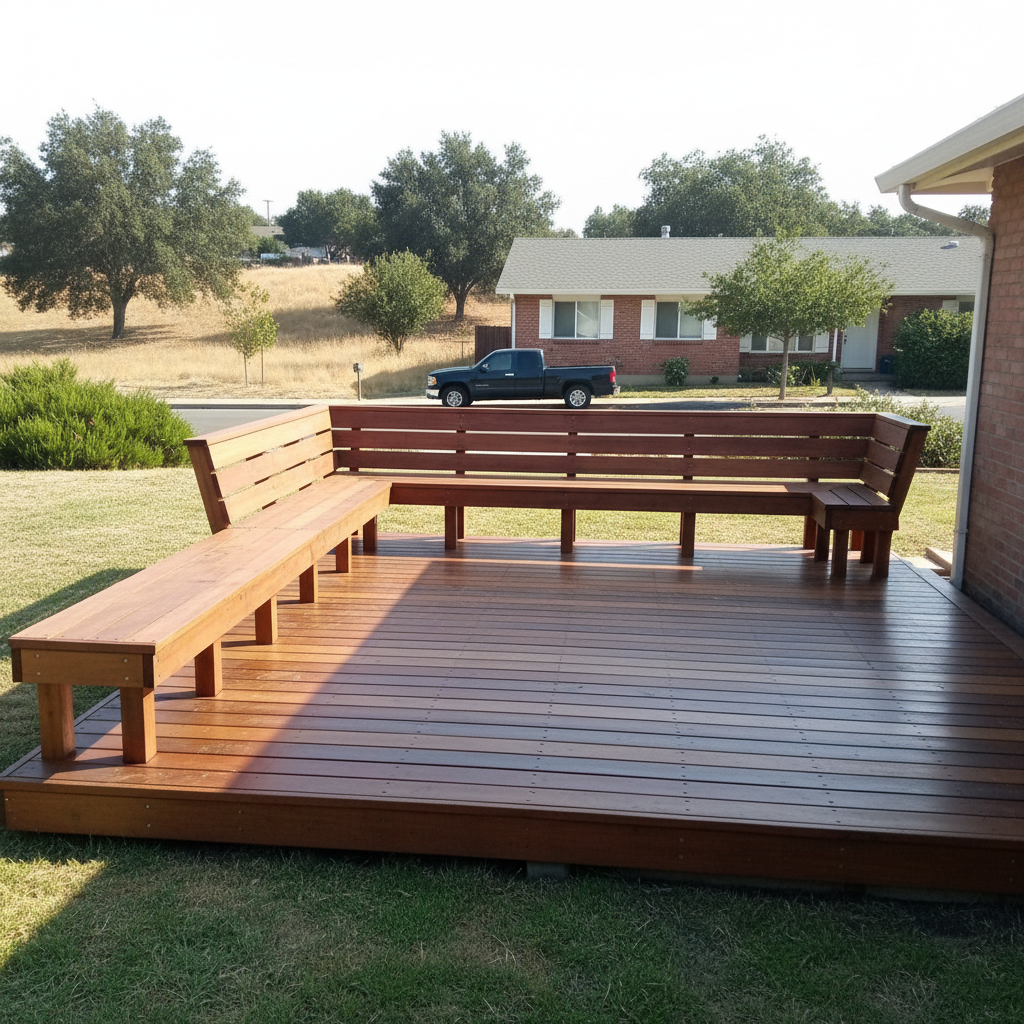
People ask us if there's a bad month to build a deck here. There isn't a bad month the way there is in Denver or Minneapolis, where you can't pour a footing until the ground thaws. San Diego's ground doesn't freeze. But that doesn't mean every month is the same, and if you've priced a deck for spring and it's still sitting unbuilt in July, there's usually a reason tied to weather, not just scheduling.
What San Diego doesn't have to deal with
No freeze-thaw cycle means we don't lose footing cure time to frost heave, and we don't have to dig below a frost line that doesn't exist here. That's a real advantage over most of the country. Concrete footings still need 48 to 72 hours before they'll take framing weight, but that clock runs the same in January as it does in August. The bigger variables in San Diego are rain, humidity, and how dry the air is when you're staining or sealing wood.
The rainy season slows things down more than people expect
Most of our rain falls between December and March, and it rarely spreads evenly through the month. You get a run of dry weeks, then two or three days of real rain that turn a job site to mud fast, especially on lots with any clay content. Inland areas like Santee, El Cajon, and parts of Poway sit on expansive clay that swells when wet and shrinks hard when it dries out again. If we're digging footings in that soil right after a storm, we wait. Pouring concrete into a wet, unstable hole is how you end up with a footing that settles unevenly a year later and a deck that develops a lean on one corner. Coastal lots in places like Pacific Beach or Ocean Beach are mostly sandy loam and drain faster, so rain delays us less there, but access across a soaked yard is still a problem no matter the soil.
June Gloom is a real obstacle for stain and sealer
Late May through June, the marine layer sits low over the coast most mornings and doesn't burn off until afternoon, if it burns off at all. Humidity stays high during that window. Stain and sealer need dry wood to penetrate properly, and most products want at least 48 hours without rain before application and another 24 to 48 hours to cure before anyone walks on the boards. Applying a semi-transparent stain under gray, damp morning air is how you get a cloudy finish or one that never fully bonds. We'll push staining jobs later in the day during June Gloom season, or push them out a week if the marine layer won't lift. It's not a reason to avoid the month entirely, just something that changes the schedule.
Fall is the quiet favorite, and for good reason
September through November tends to bring Santa Ana conditions, dry offshore wind and low humidity, sometimes with temperatures that spike for a few days inland. That dry air is close to ideal for staining and sealing. It's also good for framing lumber, which wants to sit at a moisture content around 12 to 15 percent before you build with it. Wood that's absorbed moisture all spring from marine layer humidity will shrink as it dries, and shrinking lumber after the deck is built is what causes gaps between boards and squeaks at the joists later. Composite decking has its own version of this problem in reverse. PVC and composite boards expand and contract with heat, sometimes as much as 3/8 inch over a 12-foot run, so installers leave gap allowances at the ends and between boards specifically to account for that movement. Fall's steadier temperatures make those gap calculations easier to get right the first time.
Permits don't move on the calendar, so plan around them anyway
Most decks here need a permit if they're attached to the house, over 30 inches off the ground, or include a roof structure like a pergola or patio cover. That goes through the City of San Diego's Development Services Department if you're inside city limits, or the County if you're in an unincorporated area like parts of Lakeside or Alpine. Ledger attachment, footing depth, and framing all get inspected before you can close anything up, and a lot of HOA communities, Rancho Bernardo, Scripps Ranch, and Santee among them, require architectural review on top of city permitting. None of that is weather-dependent, but turnaround times stretch in spring when everyone's pulling permits at once for the same summer build-out. If you want work done by June, start the paperwork in February or March. Waiting until April to apply often means your actual construction window lands in July heat instead of the milder weather you were hoping for.
What this means for older versus newer lots
A lot of San Diego's older neighborhoods, North Park, South Park, Kensington, were built in the 1920s through the 1940s, and plenty of the decks on those houses were added decades later without much thought to ledger flashing or proper joist hangers. Repair and framing work on those houses often turns up rot or undersized framing once we open things up, and that kind of job benefits from a dry stretch of weeks, not just a dry day, since you don't always know what you're dealing with until the old boards come off. Newer subdivisions in places like Santee or Chula Vista built from the 1980s on tend to have more predictable framing and better soil compaction from the original build, so new installs there move faster and are less weather-sensitive overall.
So when should you actually build
If we had to pick, early fall through late November is usually the easiest window, dry air for stain and framing, no rain delays, temperatures that aren't brutal for a crew working in direct sun all day. Spring is a close second once the heaviest rain has passed, usually April into May, before the marine layer settles in. Summer works fine too, it just means scheduling stain and seal applications for morning hours before the heat gets to the wood. Winter is the one stretch where we're watching the forecast daily and sometimes shifting a footing pour by a few days. None of that should stop you from building whenever your life calls for it. It just means a good deck builder is paying attention to more than the calendar date on your contract. If you're weighing timing against everything else that goes into a project like this, Blackstone Outdoor Spaces can walk through what your specific lot and soil mean for scheduling before you commit to a start date.